


SIPC Review
The Securities Investor Protection Corporation (SIPC) is a non-profit organization established by the U.S. Congress to protect customers of registered brokerage firms if a broker becomes insolvent or goes out of business.
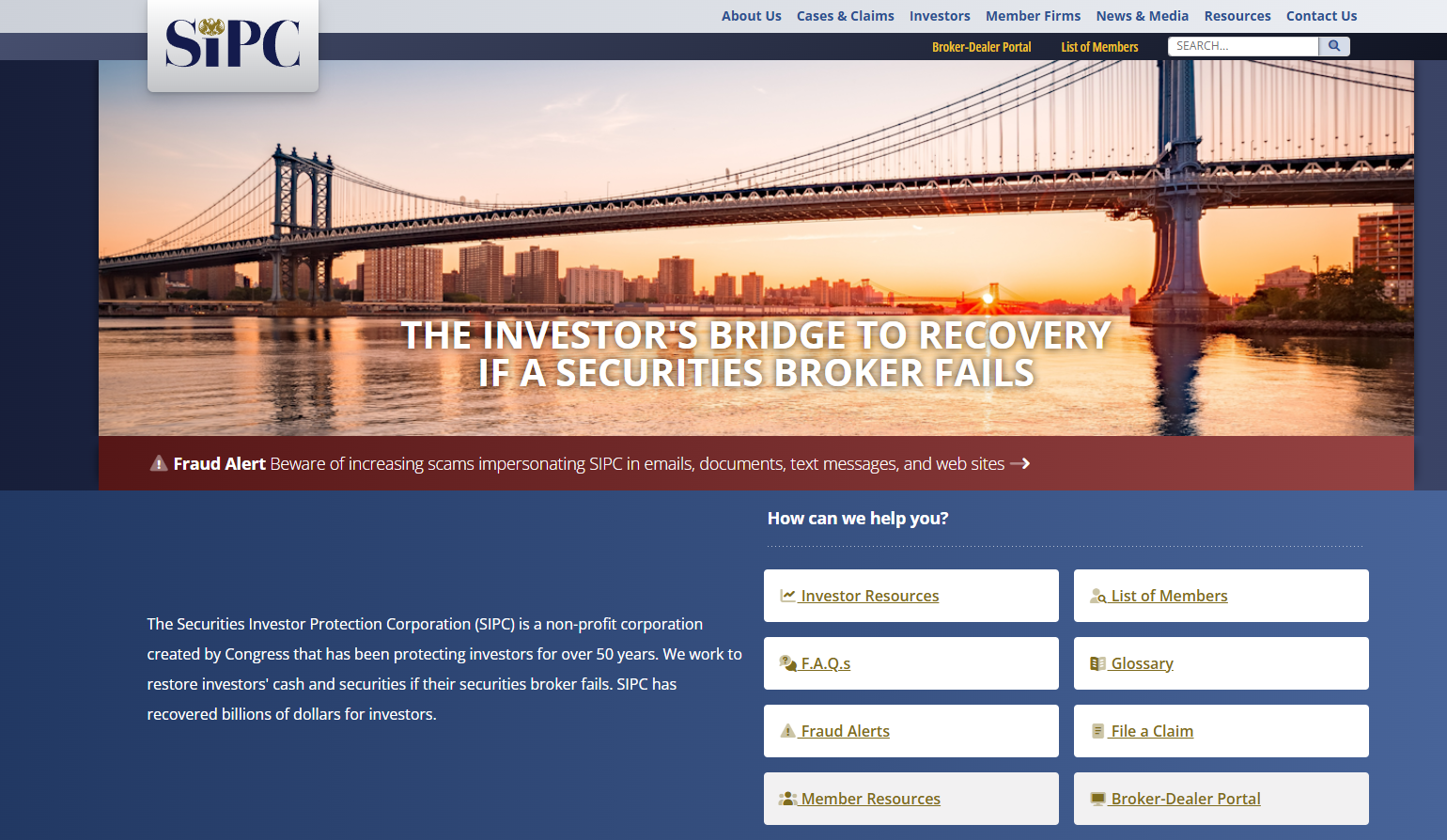
Created under the Securities Investor Protection Act of 1970, SIPC helps recover customer assets when a member brokerage firm fails financially. Its role is to return customers’ securities and cash whenever possible or provide protection within statutory limits.
Unlike a government agency, SIPC is funded by its member broker-dealers rather than taxpayers.
How Does SIPC Work?
SIPC protection only applies when a member brokerage firm becomes financially insolvent and customer assets are missing or cannot be returned.
If this happens, a court may appoint a trustee to oversee the liquidation process. The trustee works to recover customer securities and cash before SIPC protection is applied.
The process generally follows these steps:
- A SIPC-member brokerage firm fails financially.
- A court appoints a trustee to manage the liquidation.
- Customer assets are identified and returned whenever possible.
- If assets are missing, SIPC protection may cover eligible losses up to the applicable limits.
In many cases, customers recover most or all of their securities without needing to rely on the full SIPC protection limit.
What Does SIPC Cover?
SIPC is designed to protect customer assets held by a failed brokerage firm.
Protection generally applies to:
- Stocks
- Bonds
- Mutual funds
- Exchange-traded funds (ETFs)
- Cash held in brokerage accounts for investing purposes
- Other registered securities
The objective is to return the securities that customers owned—not simply reimburse their market value.
Coverage Limits
SIPC currently provides protection of up to $500,000 per customer, including a maximum of $250,000 for cash claims.
These limits apply only when customer assets are missing because a SIPC-member brokerage has failed.

The protection is intended to restore customer ownership of securities and cash, not to compensate for investment performance.
What SIPC Does Not Cover
One of the most common misconceptions is that SIPC protects investors from market losses.
It does not.
SIPC does not cover:
- Investment losses caused by market fluctuations
- Poor investment decisions
- Declines in stock or cryptocurrency prices
- Unregistered investments
- Fraud involving firms that are not SIPC members
Its protection is limited to broker insolvency and missing customer assets.
Who Is Eligible?
SIPC protection generally applies to customers of brokerage firms that are SIPC members.
Eligibility depends on:
- Whether the brokerage firm is an active SIPC member.
- Whether the assets qualify under SIPC rules.
- Whether the claim results from the broker’s financial failure rather than normal investment risk.

Investors can verify a brokerage firm’s SIPC membership through the official SIPC website.
Advantages of SIPC
SIPC provides several important benefits for investors:
- Protection if a brokerage firm becomes insolvent.
- Recovery of customer securities whenever possible.
- Statutory protection for eligible customer assets.
- Independent liquidation process supervised by a court.
- Increased confidence in the U.S. brokerage industry.
For many investors, SIPC serves as an important safeguard against brokerage failure.
Limitations
Although SIPC offers valuable protection, its scope is intentionally limited.
Important limitations include:
- No protection against market losses.
- No guarantee of investment performance.
- No coverage for investment advice.
- No protection for cryptocurrencies held directly outside eligible brokerage accounts.
- Coverage applies only to SIPC-member brokerage firms.
Understanding these limitations is essential when evaluating the overall safety of an investment account.
How SIPC Relates to Brokerage Firms
Many U.S. brokerage firms are members of SIPC, making membership an important trust indicator for retail investors.
However, SIPC membership should not be viewed as investment insurance.
Instead, it provides protection if a brokerage firm fails financially and customer securities cannot be fully returned.
Professional investors often evaluate both SIPC membership and the firm’s own financial strength when selecting a broker.
Is SIPC Legit?
Yes. SIPC is a federally mandated, non-profit corporation created by the U.S. Congress in 1970.
For more than five decades, SIPC has helped recover billions of dollars in customer assets during brokerage liquidations and remains an important component of the U.S. investor protection framework.
Frequently Asked Questions
Is SIPC the same as FDIC?
No. FDIC protects bank deposits, while SIPC protects eligible customer assets held by member brokerage firms.
Does SIPC cover stock market losses?
No. SIPC does not compensate investors for declines in the value of securities or unsuccessful investments.
Does SIPC protect cryptocurrency?
Generally, no. Cryptocurrencies are typically not considered securities covered by SIPC unless held in very specific regulated circumstances.
How can I check if my broker is a SIPC member?
Investors can verify membership using the official SIPC member search available on the SIPC website.
Final Verdict
The Securities Investor Protection Corporation (SIPC) plays a critical role in protecting customers when a U.S. brokerage firm fails financially. While it does not insure investment returns or eliminate market risk, it helps safeguard customer securities and cash if broker insolvency results in missing assets.
For investors choosing a U.S. broker, SIPC membership is an important indicator of regulatory compliance and customer protection, although it should always be considered alongside the broker’s overall financial stability and regulatory standing.



Reader reviews (0)
No reader reviews yet