

Lao Securities Commission Review
The Lao Securities Commission (LSC) describes itself as an authority responsible for regulating the securities market in Laos. According to its official website, the organization supervises licensed market participants, promotes transparency, protects investors, and contributes to the development of the country’s capital market.
While these responsibilities are typical for a securities regulator, investors should look beyond mission statements and examine whether sufficient evidence exists to support these claims. Regulatory transparency, legal documentation, and publicly available enforcement records are essential factors when assessing the credibility of any financial authority.
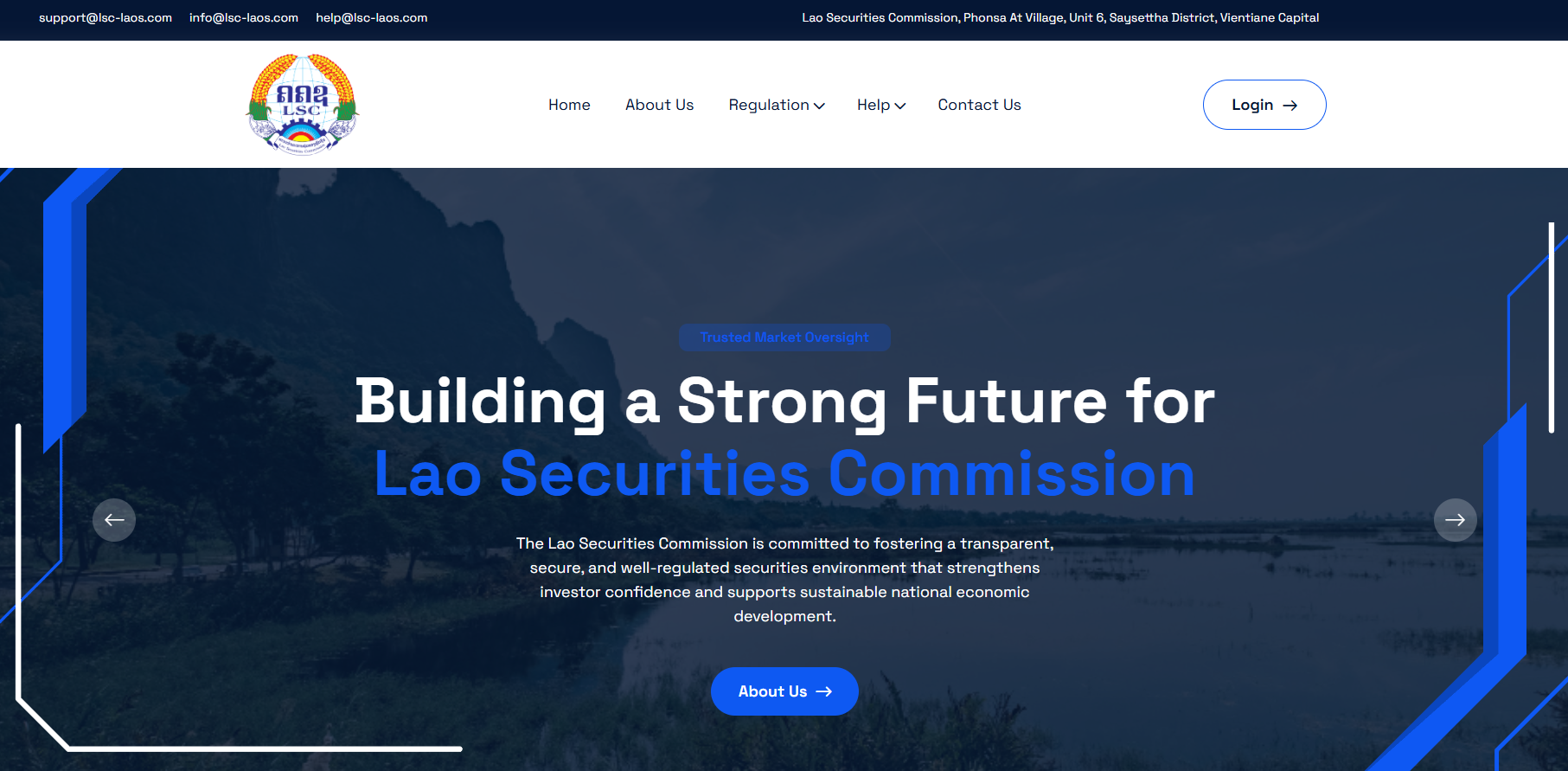
This review explores the information available on lsc-laos.com, identifies potential concerns, and explains why investors should perform careful due diligence before relying on this organization.
What Services Does Lao Securities Commission Claim to Provide?
The Commission states that its activities cover several areas of financial supervision, including:
- Securities licensing;
- Market surveillance;
- Compliance monitoring;
- Disclosure reviews;
- Investor protection;
- Corporate governance;
- Regulatory guidance;
- Market development.
According to the website, these services are intended to create a fair, transparent, and stable investment environment while strengthening confidence in Laos’ capital market.
However, the website provides only brief descriptions of these responsibilities without explaining how they are implemented or supported by regulatory procedures.
Is the Website Transparent?
Transparency is one of the most important characteristics of a reliable financial regulator.
Although the Lao Securities Commission website appears modern and professionally designed, many pages contain similar promotional statements instead of practical information.
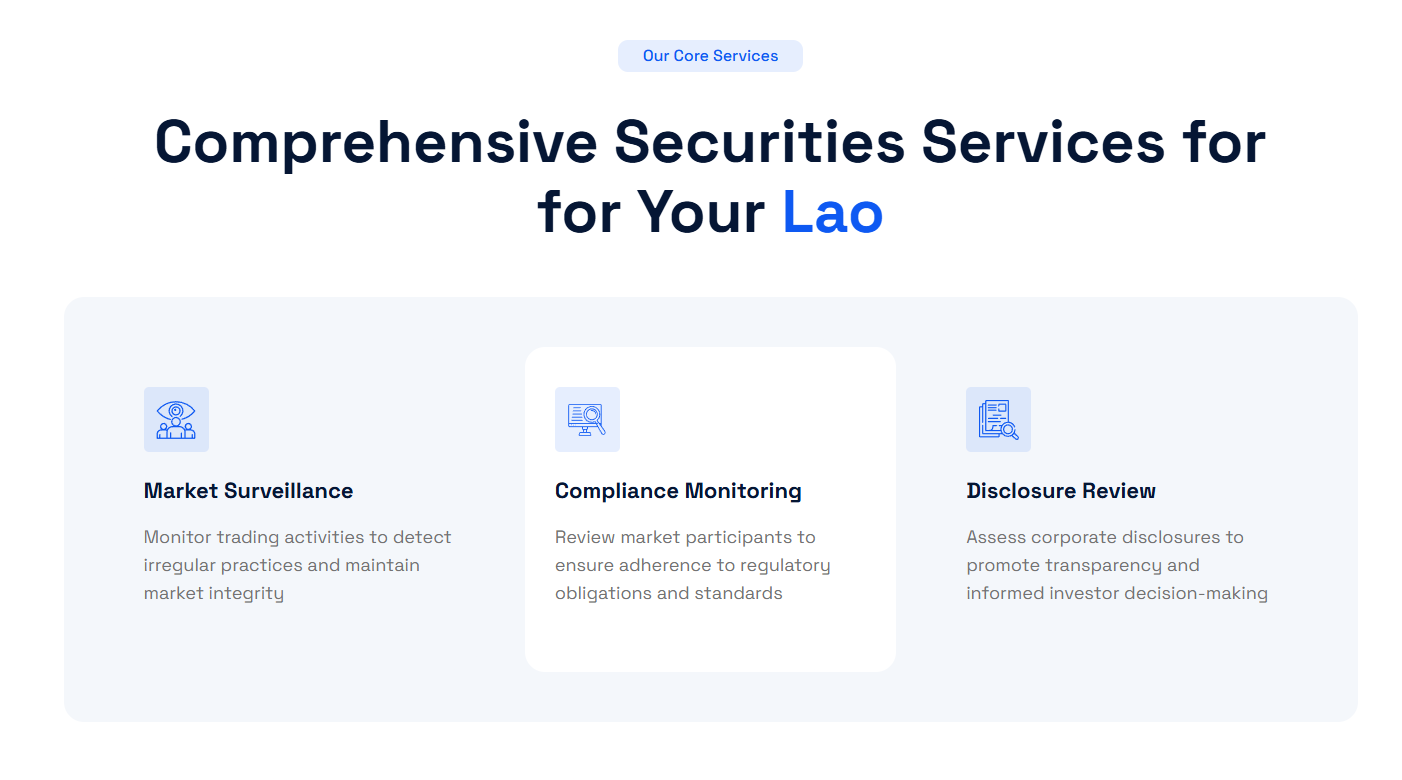
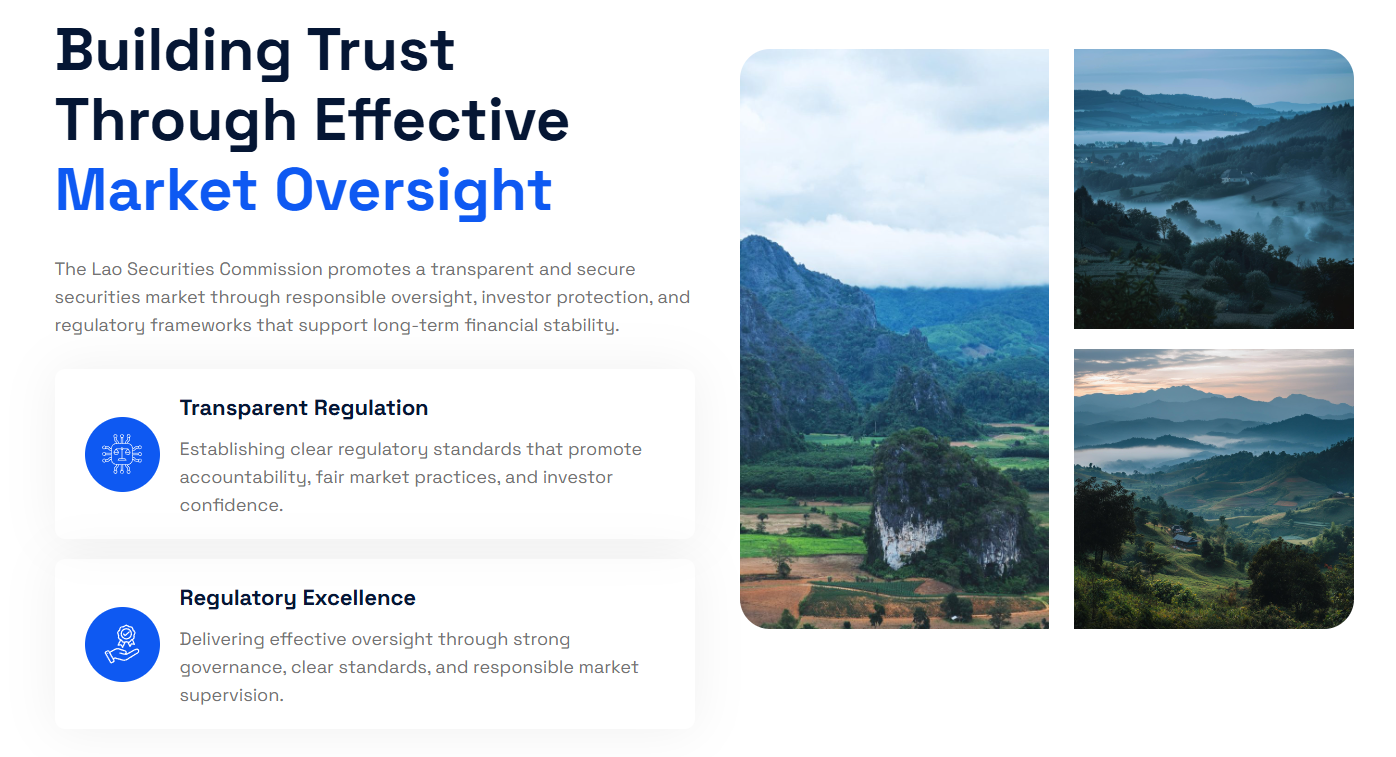
Visitors will frequently encounter phrases such as:
- Transparent Regulation
- Regulatory Excellence
- Investor Protection
- Financial Stability
- Market Integrity
Despite these claims, the website provides very little supporting documentation explaining how these goals are achieved.
For example, there are no detailed explanations of regulatory investigations, disciplinary actions, enforcement statistics, or previous supervisory cases.
Missing Information That Investors Normally Expect
A review of the website reveals several areas where information appears incomplete.
Among the missing or limited details are:
- the Commission’s history;
- biographies of senior officials;
- organizational structure;
- annual activity reports;
- enforcement decisions;
- regulatory statistics;
- public registers of licensed companies.
Most established financial regulators publish this type of information to improve accountability and allow investors to verify their activities independently.
Its absence makes evaluating the organization’s regulatory performance considerably more difficult.
Licensing Process Remains Unclear
The website states that the Commission licenses securities market participants and supervises their activities.
However, it does not explain several important aspects of the licensing process, including:
- qualification requirements;
- application procedures;
- documentation standards;
- approval timelines;
- licensing fees;
- renewal requirements.
Without these details, companies seeking authorization have little practical guidance regarding how licensing is actually performed.
A transparent licensing framework is generally considered one of the key indicators of a mature financial regulator.
Official Government Regulator Uses a Different Website
One fact that deserves attention is that the official Lao Securities Commission Office operates under the government domain lsc.gov.la.
That website publishes a significantly broader range of official materials, including:
- securities legislation;
- regulatory announcements;
- licensing guidance;
- legal documents;
- official notices;
- institutional information.
By comparison, lsc-laos.com provides considerably less regulatory documentation while using a commercial “.com” domain.
Although using a commercial domain does not automatically indicate illegitimacy, investors should independently verify which organization they are dealing with before relying on regulatory claims.
User Complaints
Independent reviews of Lao Securities Commission remain relatively limited, but several published complaints describe similar experiences.
According to these users, they were informed that previously lost investment funds had been located and could supposedly be recovered.
Before receiving the money, however, they were allegedly asked to pay various charges, including:
- processing fees;
- security deposits;
- account activation costs;
- currency conversion fees.
Some reviewers claim that new payment requests continued to appear after previous charges had already been paid.
These reports have not been independently verified and represent individual experiences. Nevertheless, they resemble common advance-fee recovery schemes frequently encountered in online investment fraud.
For this reason, investors should remain cautious whenever anyone claims that lost funds can be recovered only after paying additional fees.
Warning Signs
Based on the available information, several factors may justify additional caution:
- limited institutional transparency;
- lack of detailed regulatory documentation;
- unclear licensing procedures;
- absence of publicly available enforcement history;
- little information regarding management;
- repeated use of general marketing language;
- user complaints describing advance payment requests during alleged fund recovery.
None of these factors alone proves misconduct. However, taken together, they reduce transparency and make independent verification more difficult.
Should You Trust Lao Securities Commission?
Before relying on any financial regulator, investors should confirm its legal authority, licensing framework, and public record.
In the case of Lao Securities Commission, much of the information that would normally help establish credibility is either unavailable or presented only in general terms.
Investors should independently verify regulatory claims, check official government sources, and avoid making decisions based solely on statements published on a commercial website.
Special caution is also advisable whenever third parties request advance payments in exchange for recovering allegedly lost investments.
Final Verdict
Lao Securities Commission promotes itself as an organization responsible for regulating Laos’ securities industry and protecting investors. However, a detailed review of its website raises several questions regarding transparency, regulatory disclosure, and the availability of verifiable information.
The website lacks many of the features commonly associated with established financial regulators, including comprehensive legal documentation, public enforcement records, detailed licensing procedures, annual reports, and information about senior management. In addition, the existence of the official Lao Securities Commission Office under the government domain lsc.gov.la highlights the importance of carefully confirming which organization is being referenced.
While the organization presents itself as a securities regulator, the limited amount of publicly available information makes it difficult to independently verify the scope of its authority. Combined with online complaints describing alleged fund recovery offers that required advance payments, these factors suggest that investors should approach any interaction with caution.
Before sending money, relying on regulatory claims, or working with companies that state they are supervised by Lao Securities Commission, investors should conduct thorough independent research, verify licenses through official government sources whenever possible, and never pay unexpected fees or deposits in connection with promised fund recovery.
Careful due diligence remains the most effective protection against financial losses and fraudulent investment schemes.
Reader reviews (0)
No reader reviews yet