


Zefeeco Broker Review
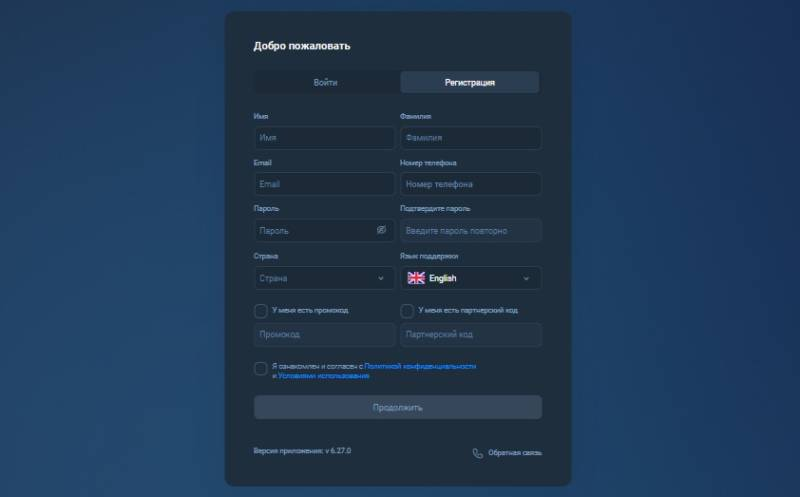
Zefeeco presents itself as an online broker offering access to forex, stocks, indices, cryptocurrencies, metals, and commodities. The platform also promotes its own trading software, CapitalRoute.
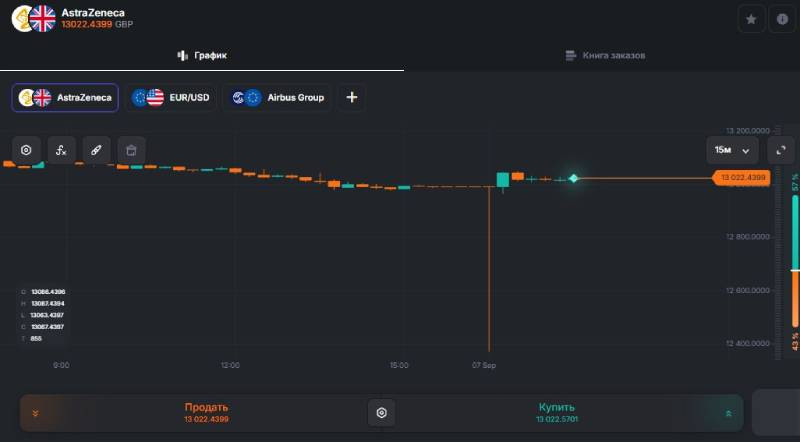
There is no clearly identified legal entity behind the Zefeeco brand, no disclosed jurisdiction, no verifiable brokerage license, and no transparent information about the company responsible for handling client funds. Trading conditions are also largely undisclosed.
Several domains are associated with the project, while user reports already mention problems with withdrawals and requests for additional payments.
Taken together, these are not minor transparency issues. They are sufficient reasons to treat Zefeeco as a high-risk broker and avoid depositing funds until its regulatory and corporate status can be independently verified.
Zefeeco Does Not Clearly Identify the Company Behind the Broker
A legitimate broker handling customer money should be easy to identify legally.
A client should be able to find the company’s full legal name, registration number, registered address, regulator, license number, and the jurisdiction in which the client agreement is governed. Zefeeco does not provide this level of information.
The project uses the zefeeco.com domain and is also associated with zefe-eco.world and ze-fco.link. Publicly available information identifies the brand, but not a clearly verifiable legal entity responsible for providing brokerage services.
The only publicly cited contact is [email protected]. A domain-based email address is not proof of corporate registration and does not tell a client who will legally receive their money.
This creates a fundamental problem: before asking whether Zefeeco is a good broker, a potential customer first has to establish who the broker actually is.
The Domain History Does Not Prove a Long-Established Brokerage
The main zefeeco.com domain was registered on February 21, 2022. However, domain age should not be confused with the age of a financial business.
Current third-party checks show that the domain was updated in June 2026, while the other domains associated with the platform were registered much more recently. The zefe-eco.world domain, for example, was registered in June 2026.
This matters because an old domain can create the appearance of an established online presence without proving that the same brokerage has been operating under that domain for years.
There is another important point: automated website-security services should not be confused with financial due diligence. One automated checker currently gives zefeeco.com a positive technical assessment, noting a valid SSL certificate and an older domain. At the same time, it explicitly states that it could not analyze the website’s content and recommends additional research.
An SSL certificate only means that the connection is encrypted. It does not mean that a broker is licensed, solvent, or legitimate.
No Verifiable Brokerage License
The most important issue is regulation. Zefeeco does not clearly publish a license number, regulator, or official register entry that would allow a client to verify its authorization to provide brokerage services.
Independent reviews published in late August and early September 2026 also report that the company’s legal status and regulatory information could not be established. For a company accepting deposits for financial trading, this is a serious problem.
A broker does not become regulated simply because its website displays financial terminology, provides charts, or offers a professional-looking trading interface. Regulation comes from an identifiable legal entity holding a specific authorization from a financial authority.
CapitalRoute: A Closed Trading Environment
Zefeeco directs clients to CapitalRoute for trading. The platform reportedly provides charts, prices, account balances, and open positions. However, publicly available information does not establish who developed the software, which liquidity providers are connected to it, where its prices originate, or how client orders are executed.
That distinction is critical. A trading terminal can display a balance and show profitable positions without proving that the corresponding orders were actually executed in the underlying market. This does not by itself prove that CapitalRoute is manipulating trades. There is not enough independently verifiable technical evidence to make that claim.
But the burden of proof is not on the client. If a broker wants customers to entrust it with real money, the broker should be able to explain who executes the orders, where liquidity comes from, how prices are sourced, and which legal entity is responsible for the service. With Zefeeco, these questions remain unanswered.
The Trading Conditions Are Too Opaque
Zefeeco advertises several asset classes, including forex, stocks, indices, cryptocurrencies, metals, and commodities.
Important parameters such as the minimum deposit, spreads, commissions, swaps, and leverage are not clearly published in a comprehensive schedule. That makes it impossible to properly calculate the cost of trading before opening a real account.
A broker can advertise dozens of instruments and still provide poor or unfavorable conditions. The number of available assets says very little about the quality of the brokerage service.
In Zefeeco’s case, the lack of published conditions adds another layer of uncertainty to an already opaque business structure.
Crypto Staking Adds Another Layer of Risk
Zefeeco reportedly offers cryptocurrency staking alongside its trading services. There is insufficient public information about the protocol used, custody arrangements, counterparties, or the mechanism through which staking returns are generated. This is important because staking involves more than simply displaying an expected return in an account.
A client should know where the cryptocurrency is held, who controls the assets, what smart contracts or counterparties are involved, and under what conditions the assets can be withdrawn. Without that information, transferring cryptocurrency into the program introduces an additional layer of counterparty risk.
Withdrawal Complaints Are the Most Serious Warning Sign
The biggest practical concern is not the lack of a polished website. It is what happens when a client tries to get their money back.
Several recent reports concerning Zefeeco mention withdrawal problems and requests for additional payments. One published review alleges that a client was asked to pay for insurance before receiving a withdrawal. Other reports mention demands involving taxes, commissions, or other payments before funds could supposedly be released.
These are individual allegations and should not be presented as independently proven facts about every Zefeeco client.
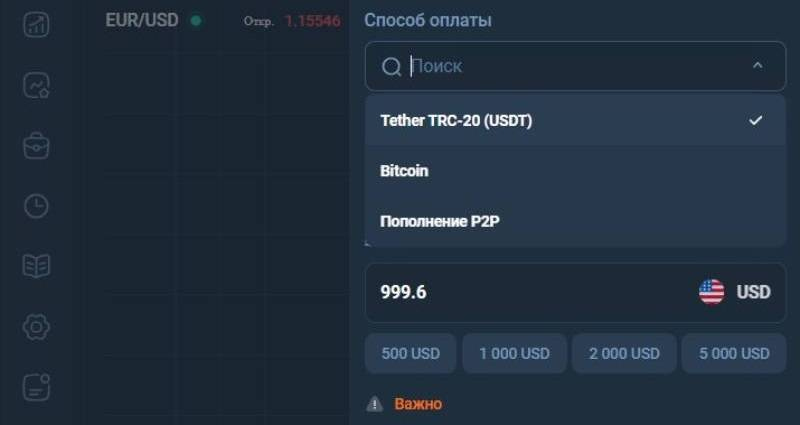
But the pattern itself is highly relevant. If a broker tells a customer that an existing balance cannot be withdrawn until the customer sends additional money, the customer should stop and verify the demand before paying anything further.
This is particularly important when the requested payment is described as:
- an insurance fee;
- a tax payment;
- an account-unlocking fee;
- an AML verification payment;
- a release fee;
- a conversion charge;
- an advance commission.
A demand for more money in order to release money already shown in the account is a major fraud warning sign.
A Trading Balance Is Not Proof That Money Exists
This distinction is often missed by victims of online investment scams. Seeing $10,000, $50,000, or $100,000 displayed inside a trading account does not prove that the corresponding amount of real money exists in a bank account, brokerage account, exchange wallet, or segregated client account.
The balance is only meaningful if it can be reconciled with actual transactions and ultimately withdrawn. This is particularly important when the platform uses a closed or proprietary interface and does not provide independently verifiable trade execution records.
A growing number on a screen is not the same thing as accessible capital.
The Zefeeco Model Raises Multiple Red Flags at Once
Zefeeco presents itself as a financial intermediary while leaving its legal operator and jurisdiction unclear. Its regulatory status cannot be independently established from the information it publishes.
Its trading software is not supported by transparent information about execution and liquidity. Its trading conditions are incomplete.
The project uses multiple domains, including domains registered only in 2026. And recent user reports describe difficulties with withdrawals and additional payment demands.
That combination creates a materially different risk profile from an ordinary regulated broker.
What You Should Not Do With Zefeeco
Do not send additional money simply because a representative claims that it is required to release your withdrawal.
Do not pay an alleged tax to a personal account or an unknown cryptocurrency wallet without independently verifying the legal obligation.
Do not purchase an insurance policy from a company recommended by the broker solely because the broker says it is required for withdrawal.
Do not install remote-access software at the request of an alleged account manager.
Do not provide banking credentials, card security codes, or cryptocurrency wallet seed phrases.
And do not assume that paying one additional fee will be the final step. If the underlying problem is fraudulent, another payment can simply produce another reason why the withdrawal cannot yet be processed.
Zefeeco Verdict
Zefeeco has not provided enough verifiable information to establish itself as a transparent and properly regulated online broker.
The central problems are straightforward:
- The legal operator is unclear.
- The jurisdiction is undisclosed.
- A verifiable brokerage license has not been established.
- The trading conditions are incomplete.
- The infrastructure behind CapitalRoute is insufficiently transparent.
- The project uses several domains with a recent history.
- And multiple recent reports describe withdrawal problems and alleged demands for additional payments.
None of these points, taken individually, is conclusive proof of fraud. Taken together, however, they create a level of risk that should not be ignored.
Our assessment is therefore clear: Zefeeco should be treated as a high-risk and potentially fraudulent broker. We do not recommend depositing funds until the company can provide independently verifiable proof of its legal identity, regulatory authorization, trading infrastructure, and withdrawal procedures.
If you have already deposited money with Zefeeco and are being asked to make another payment before receiving your funds, do not assume that the payment will unlock the withdrawal. Preserve all communications, transaction records, wallet addresses, screenshots, and account statements before taking further action.



Reader reviews (0)
No reader reviews yet