


Eceburc Broker Review
Eceburc presents itself as an international broker offering access to financial markets and promising clients a range of trading opportunities designed to help them grow their capital.
At first glance, the company attempts to create the image of an established financial intermediary with international operations, multiple regulatory licenses, several account types, and access to a dedicated trading platform. However, a closer examination reveals a number of inconsistencies that raise questions about the reliability and transparency of the broker.
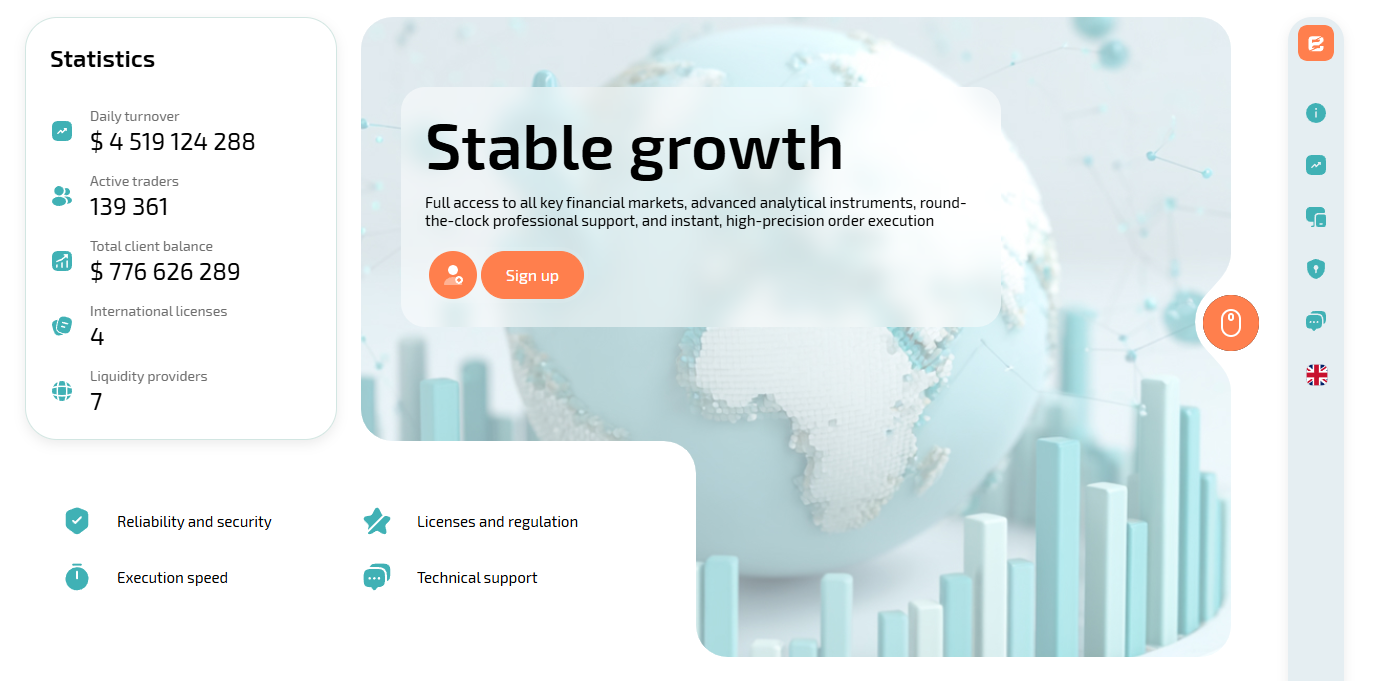
In particular, information provided by the company could not be fully verified through official sources, while traders have reported difficulties withdrawing their money from the AssetCenter terminal and being asked to make additional payments before funds could allegedly be released.
This Eceburc review examines the broker’s claimed regulation, corporate information, domains, trading conditions, legal documentation, withdrawal methods, and available client complaints.
Eceburc Regulation and License
Eceburc claims that it has been operating since 2018 and is registered in Argentina. The company also states that its activities are covered by licenses from several international regulators, including CSSF, FCA, VFSC, and DFSA.
These claims would normally provide an important indication of the broker’s regulatory status. However, the company does not provide sufficient official documentation that would allow clients to independently verify the licenses or registration details.
A check of the official registers of the regulators mentioned by Eceburc did not identify the broker among the licensed entities.
The company was additionally checked against the register of the Central Bank of Russia. Eceburc could not be found there either.
Therefore, the regulatory claims presented by Eceburc remain unconfirmed. This is one of the most important issues identified during the review because clients dealing with an unverified broker may not receive the protections normally associated with regulated financial institutions.
The discrepancy is particularly significant because Eceburc presents itself as an internationally regulated company while failing to provide independently verifiable evidence of the licenses it claims to hold.
Eceburc Company Information and Contact Details
The broker provides an email address, telephone number, and physical address for contacting its representatives.
The listed email is [email protected], while the telephone number is +54 11 4550-2198.
Eceburc states that its office is located at:
Cabildo Avenue, 1100, Autonomous City of Buenos Aires, C1426, Argentina.
However, verification of these details raises further concerns.
According to the email verification information included in the research materials, the [email protected] address does not exist.

This is particularly relevant because users have reportedly complained about difficulties communicating with the broker’s representatives. An inactive support address would make it considerably harder for clients to establish direct communication with the company.
The physical address also could not be independently confirmed as an Eceburc office. A search using online maps did not identify a business listing or office marker for the broker at Cabildo Avenue, 1100.
The address was additionally checked through info-clipper.com. The company could not be found in the service’s database.
None of these findings alone conclusively proves that the company has no physical presence. Nevertheless, the inability to independently verify the stated office, combined with the unconfirmed licensing information and questionable email address, creates a significant transparency issue.
Eceburc Websites and Trading Platform
Eceburc operates two main domains:
- eceburc.com – the company’s presentation website;
- ece-burc.biz – the trading terminal.
Using separate domains for a corporate website and a trading platform is not unusual in the financial industry. The age and history of the domains, however, deserve closer attention.
The ece-burc.biz trading domain was registered on May 7, 2026. This is a relatively recent registration considering that Eceburc claims to have been operating since 2018.
The difference between the company’s stated history and the age of the domain used for its trading infrastructure does not by itself establish wrongdoing. However, it is an inconsistency that should be considered when evaluating the broker’s background.
Eceburc Trading Accounts and Conditions
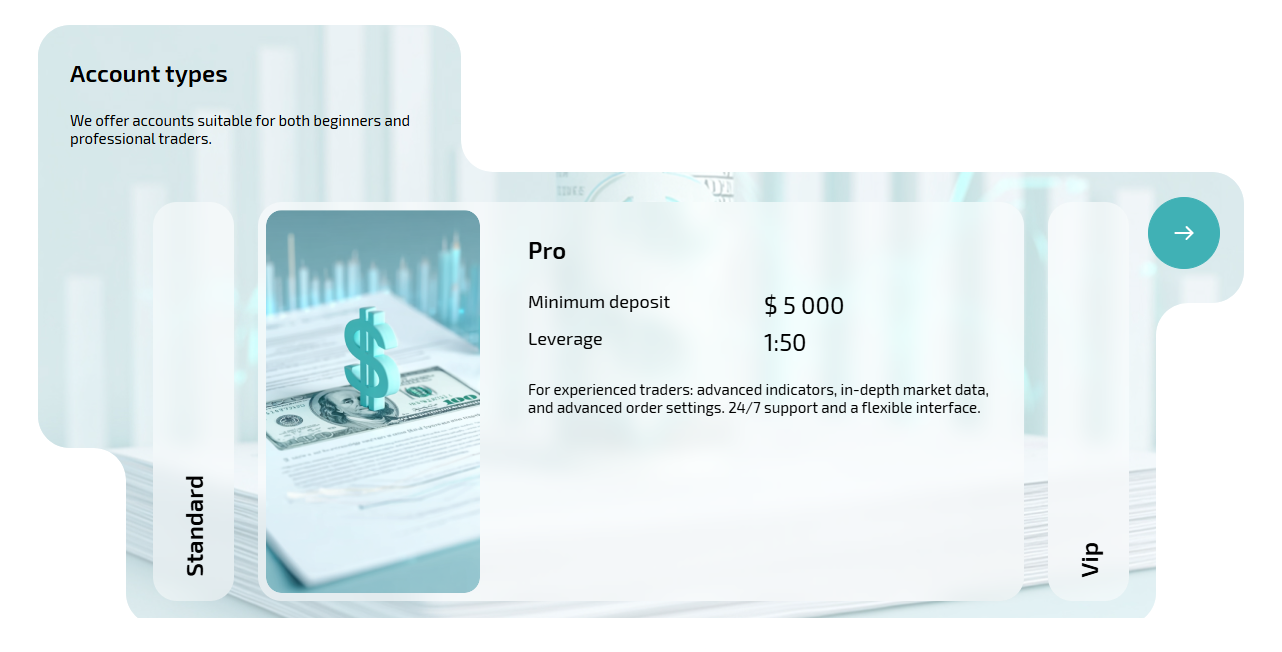
Eceburc offers three account categories with different deposit requirements and leverage levels.
The Standard account is presented as an entry-level option with a minimum deposit of $150 and leverage of up to 1:20.
The Pro account requires at least $5,000 and provides leverage of up to 1:50.
The VIP account is aimed at clients depositing at least $25,000 and offers leverage of up to 1:100.
The leverage offered on the VIP account deserves particular attention.
European regulators introduced restrictions on leverage available to retail clients in 2018. For most major currency pairs, the maximum permitted leverage for retail clients is 1:30.
Consequently, the advertised leverage of 1:100 would not be compatible with the European retail framework if Eceburc were actually providing such services to retail clients under EU regulation.
This creates another question concerning the relationship between the broker’s advertised regulatory status and the conditions it offers to clients.
Eceburc Legal Documents and Policies
The broker publishes several standard documents intended to regulate the relationship between the company and its clients.
These include:
- Terms and Conditions;
- Risk Disclosure;
- Anti-Money Laundering Policy;
- Conflict of Interest Policy;
- Withdrawal and Refund Rules.
The general structure of the documentation is similar to that used by many online brokerage platforms.
However, the documents also contain provisions that substantially limit the broker’s responsibility for losses experienced by clients.
Financial losses, reductions in account balances, technical problems, market fluctuations, and other circumstances affecting the client’s trading account are largely treated as risks assumed by the trader.
Such clauses are not necessarily unusual in brokerage agreements and cannot independently establish that a company is fraudulent. The concern arises from the broader context. When a broker’s regulatory status cannot be verified and its corporate information contains inconsistencies, extensive liability limitations provide clients with another reason to exercise caution.
Eceburc Deposit and Withdrawal Methods
Eceburc claims to support several payment methods for deposits and withdrawals. These include bank cards, international SWIFT transfers, electronic payment services, and cryptocurrency wallets.
The payment practices described in user complaints, however, raise additional questions.
Some reports state that clients funded their accounts using bank cards belonging to third parties rather than transferring money to a corporate bank account. Other complaints mention cryptocurrency deposits being sent to newly created wallet addresses without an established transaction history.
The identity of the actual recipient is an important consideration when depositing funds with an online broker. Ideally, the payment recipient should be clearly connected to the legal entity providing the financial service.
When money is transferred to third-party payment details or cryptocurrency addresses that cannot be clearly associated with the broker, it becomes more difficult for a client to establish who received the funds and what legal entity is responsible for them.
Conclusion on Eceburc
The investigation into Eceburc has identified multiple inconsistencies between the information presented by the broker and the data that can be independently verified.
The company’s claimed CSSF, FCA, VFSC, and DFSA licenses could not be confirmed through the relevant official registers. Its claimed registration in Argentina also lacks sufficient independent verification. The stated physical office could not be confirmed through online maps, while the listed support email reportedly does not exist.
The broker’s domain history raises additional questions. Eceburc.com was registered in 2022, its ownership information is hidden, and archived versions show that the domain was used by an unrelated Turkish construction company in 2023. The trading domain ece-burc.biz, meanwhile, was registered only in May 2026 despite the company’s claim of operating since 2018.
The available complaints add another significant concern. Users have described difficulties withdrawing funds, additional payment demands, repeated delays, account restrictions, and the loss of communication with company representatives.
No single finding is sufficient to establish the nature of Eceburc’s operations. However, taken together, the unverified regulatory claims, questionable corporate information, domain history, relatively new trading domain, and withdrawal-related complaints represent a substantial risk profile.
Based on the available information, Eceburc does not provide enough independently verifiable evidence to establish itself as a transparent and properly regulated broker. Prospective clients should therefore exercise extreme caution before registering an account or transferring funds to the company.



Reader reviews (0)
No reader reviews yet